What's new
Welcome to our product changelog!
Explore the latest platform improvements, feature releases, and updates as we continue to evolve the platform.
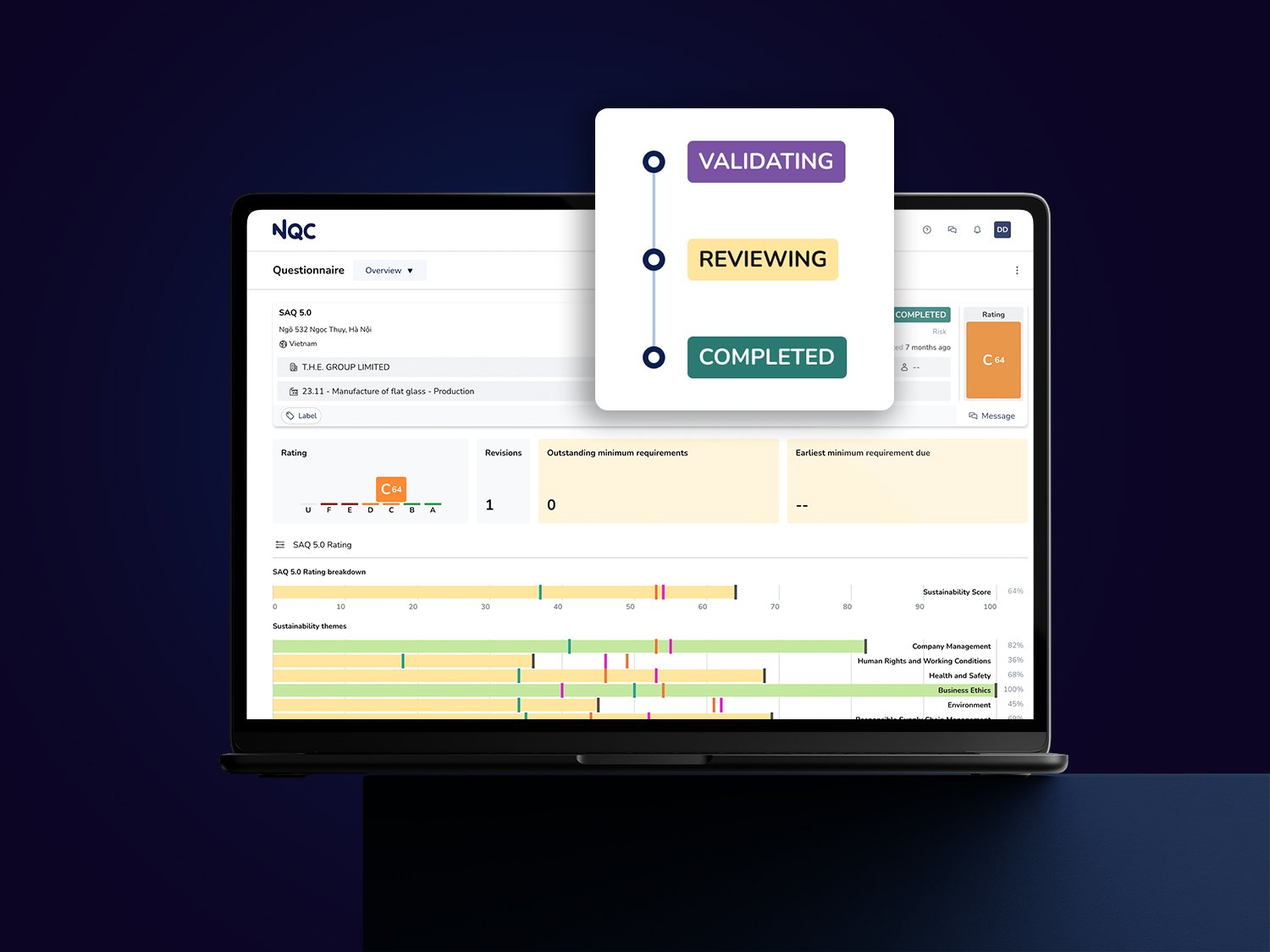
The Drive Sustainability SAQ workflow now includes a REVIEWING stage between VALIDATING and COMPLETED.
We recognise the importance of providing a supplier feedback loop where there may be queries relating to how your SAQ assessment has been rated. This new status automates the existing validation-query process directly on the platform, creating a clearer and more consistent way for you to review your provisional ratings and raise evidence-related queries.
After validation, you can view a provisional SAQ Rating that is visible only to your organisation. Your SAQ will only move into a REVIEWING status once, either when you first complete and submit your SAQ assessment or when you update your SAQ to amend previous responses to address gaps or recommendations for improvement. You then have two business days to check that the rating reflects the evidence submitted and raise any evidence-related queries.
If no factual changes are needed, accept the provisional rating to share it with buyers. If you raise an evidence-related query, the rating remains private during REVIEWING; buyers see only the finalised, certified SAQ Rating after the REVIEWING stage.
Find SAQs in the REVIEWING stage using the dashboard filter or the Review button on the SAQ tile.
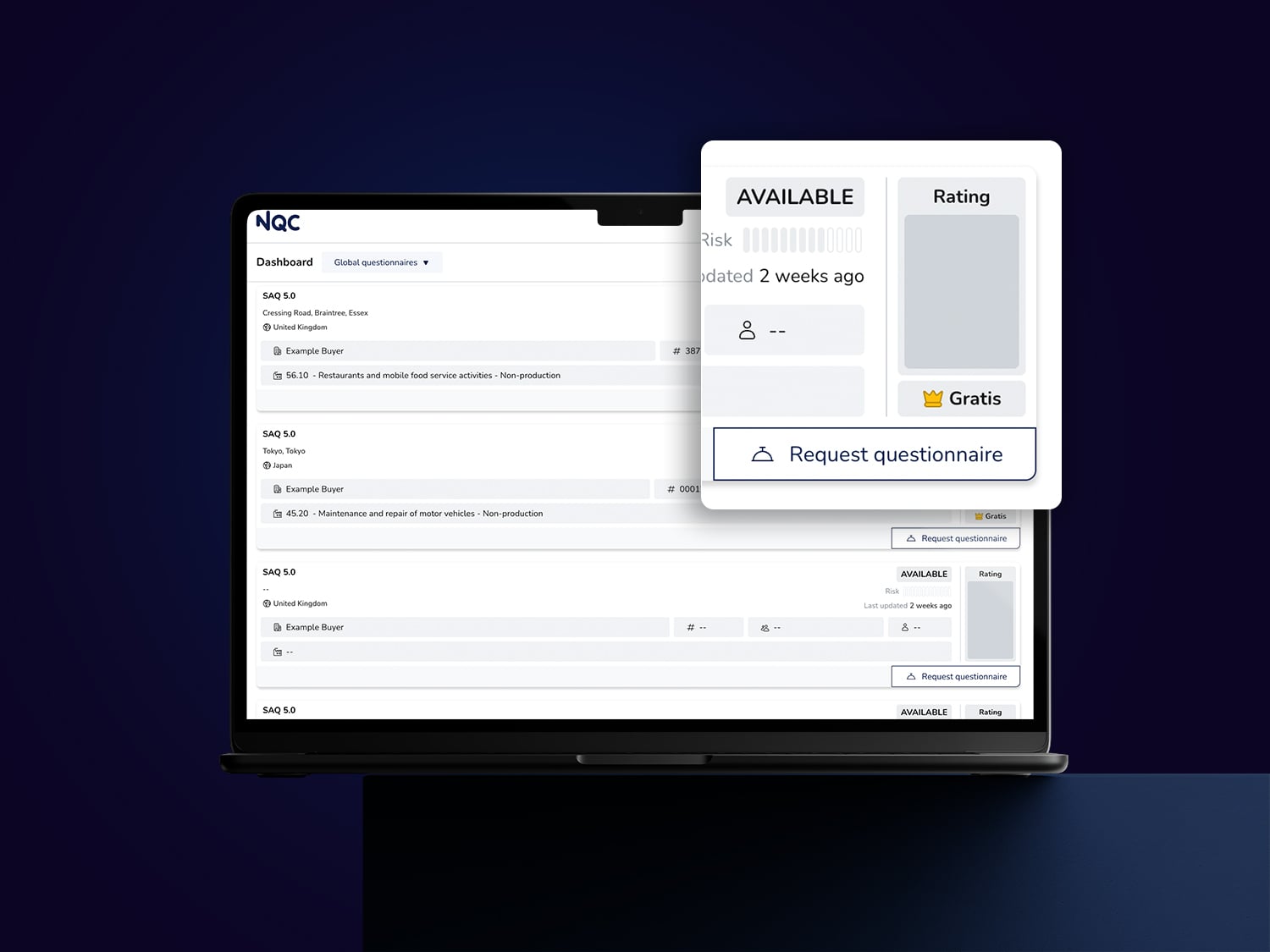
Introducing a flexible commercial model for the Drive Sustainability SAQ, giving suppliers full ownership of their compliance credentials and buyers greater supply chain visibility.
Suppliers can now proactively complete and fund their own SAQ without waiting for a customer request. Unlock unlimited sharing with buyers on the platform, share SAQs with third parties outside the platform, and get fast-track validation within 24 hours. This model enables suppliers to proactively benchmark ESG performance across all locations while easily boosting visibility to hundreds of active buyers.
Buyers can identify supplier-owned SAQs through a GRATIS badge, which highlights SAQs available to organisations at no cost. Buyers can also request supplier ownership when searching SAQs in the Global Questionnaires database or when starting a new campaign, expanding assessment coverage while staying within budget.
To support these changes, red action dots now highlight outstanding tasks, while an upgraded share modal lets you manage your buyer requests more effectively, and enter invitation codes in seconds.
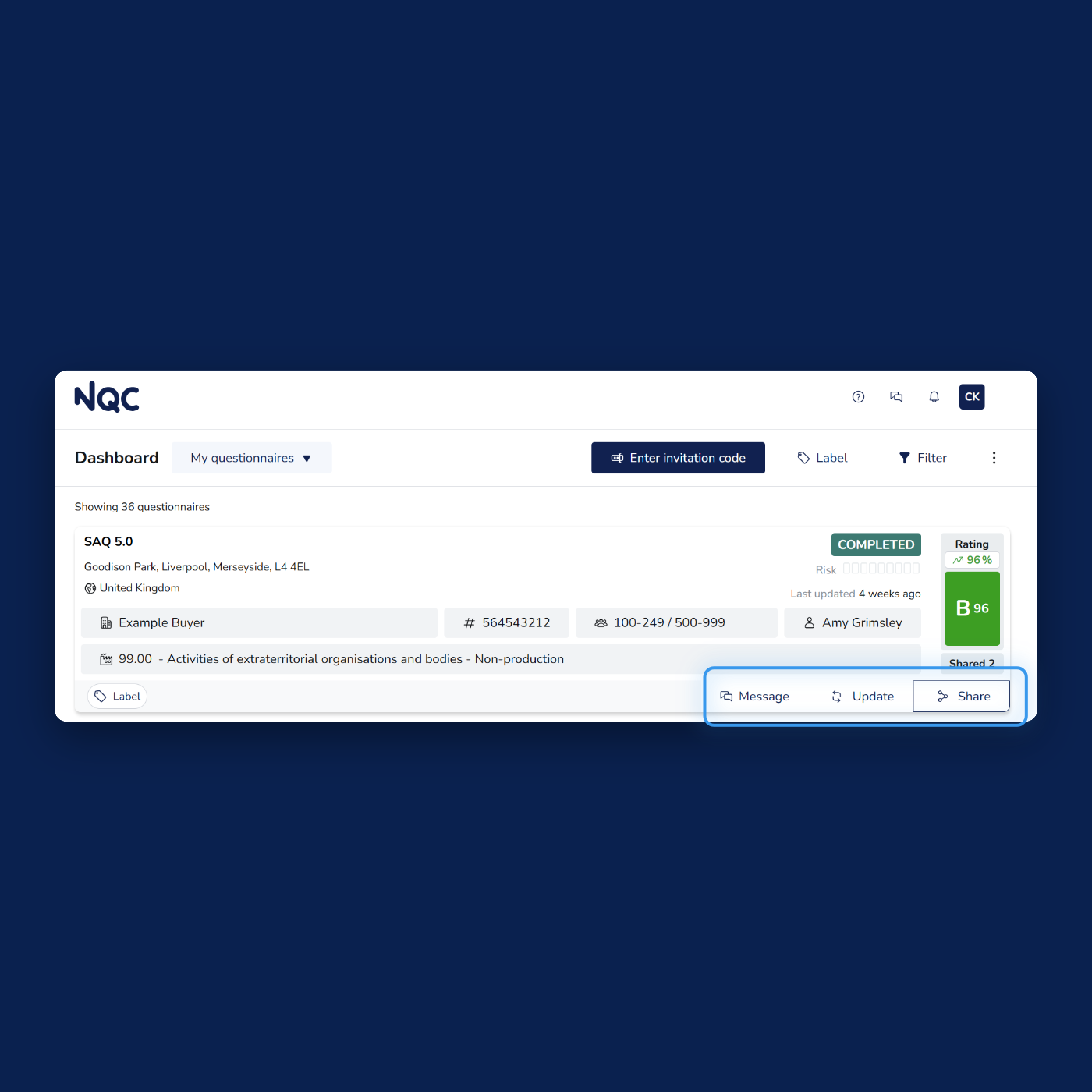
Finding your next step just got easier. A streamlined bar at the bottom of each tile now pairs every icon with a text label, and the primary action is clearly highlighted so there's no guessing.
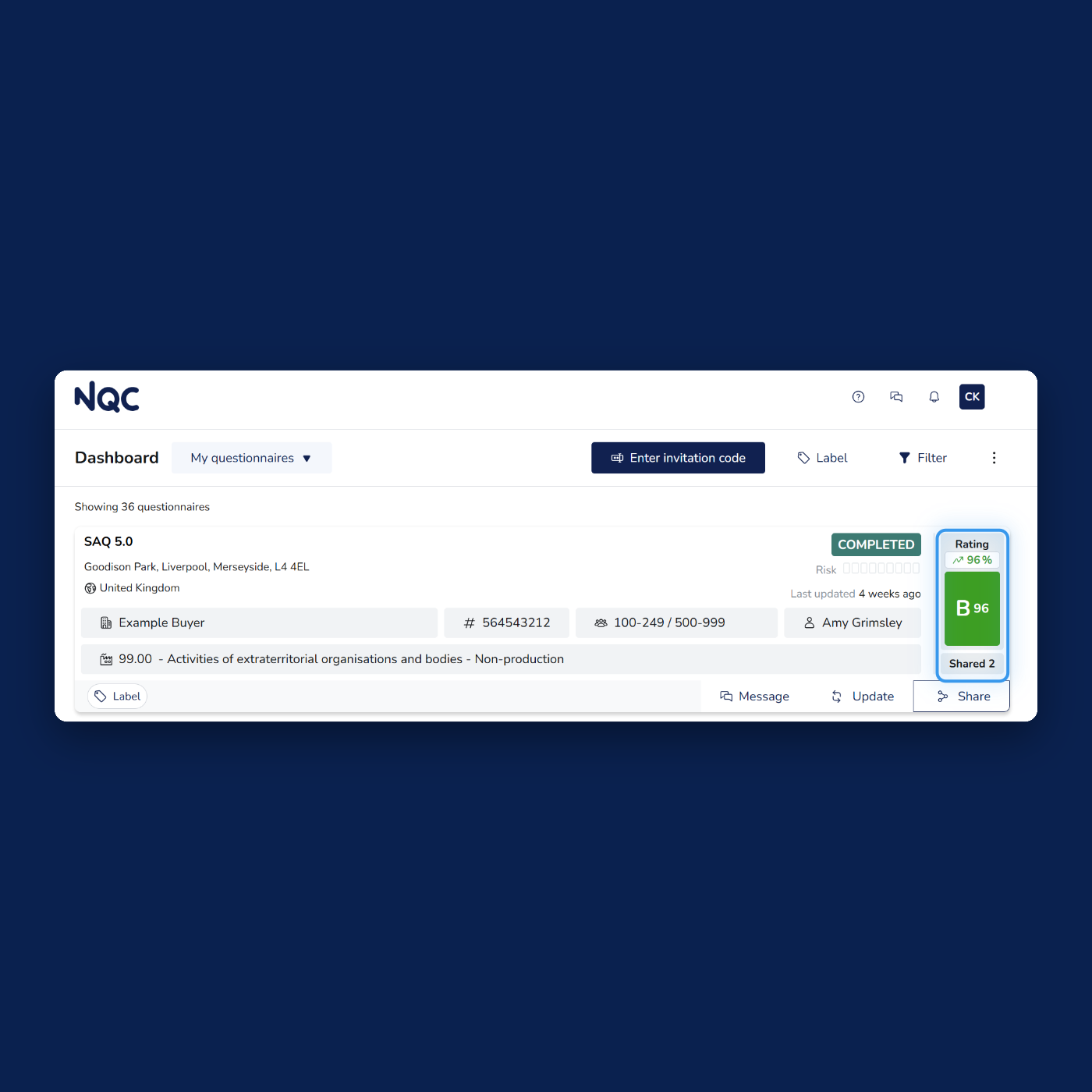
The score tile in your dashboard now shows revision-on-revision performance without having to open the questionnaire. It was always there, now you don't have to dig for it. The score delta is also available as a new column in CSV exports.
This immediate visibility into score fluctuations allows your team to continuously monitor partner performance and flag emerging risks, ensuring a more dynamic and responsive ongoing due diligence process.
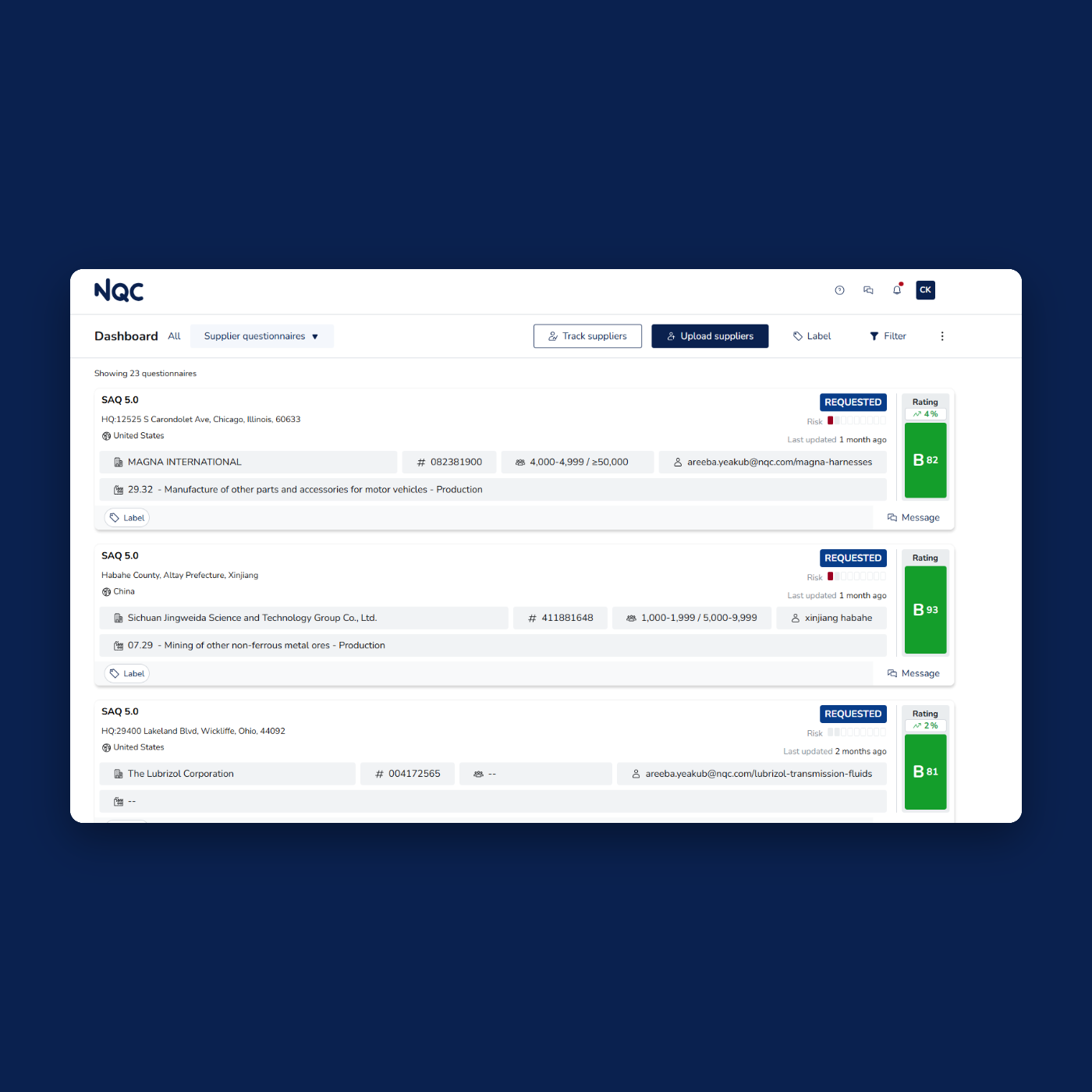
Previously, when a buyer requested an update to a completed questionnaire, the score disappeared from the tile until the new revision was finished.
Now the tile shows the status of the current revision alongside the score from the last completed one.